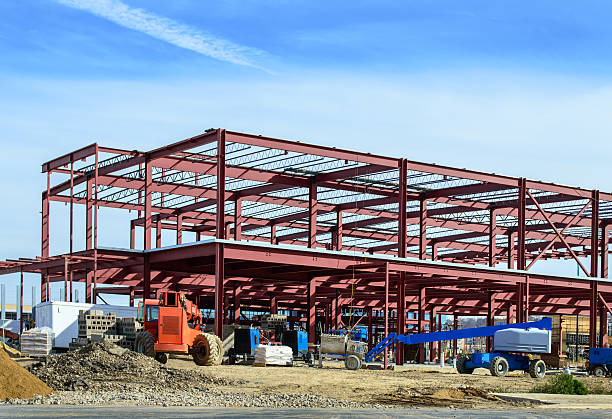

I’ve always found it funny how people assume steel-related topics have to be stiff and dry, almost like chewing on raw iron. But honestly, once you get into it, the whole thing feels a bit like understanding the differences between people at a gym. Some folks are built wide, some tall, some just… sturdy in weird ways. And that’s basically what H beams are too. Different sizes, shapes, and strengths depending on what you want them to lift or support.
And since you probably ended up here searching for something like h beam size chart maybe you even landed on that classic resource over at h beam size chart – let’s just talk through it in the most human way possible.
Understanding H Beams Without Getting Too Technical
The first time I heard someone mention H beams, I imagined a metal letter H standing upright like it was trying to audition for some construction-themed alphabet show. Turns out, the name makes sense. H beams genuinely look like the letter H when you slice them across the middle. And their biggest flex? They’re wider and beefier compared to I-beams. Imagine an I-beam going to the gym and coming out bulked up with wider flanges — that’s an H beam.
And because of that extra width, H beams can handle more load and are used for bigger projects. Bridges. High-rise buildings. Those massive god-knows-what industrial structures that look like they were built just to prove humans love overengineering.
Why People Keep Searching for H Beam Size Charts
Honestly, most people don’t wake up thinking about steel beams. But if you’re in construction, fabrication, or one of those industries where you smell welding fumes more often than coffee, you eventually end up hunting for a proper h beam size chart somewhere online. And half the time, you’re bombarded with PDFs that look like someone scanned them in 1998.
The reason this chart matters is simple. H beams come in a wide range of dimensions like depth, flange width, thickness, weight per meter, etc. Small differences in these numbers can literally change how much load a structure can carry. It’s like comparing two guys who weigh the same but one has the muscle of a wrestler and the other… well, spends more time on Instagram reels than at the gym.
A typical size chart helps you pick the right beam without guessing. If you pick one too small, the structure sags. If you pick one too big, the budget sags. Either way, something sags and nobody wants that.
A Quick Story From My Side
I once worked with a small contractor who insisted “all H beams are the same, bro”. He said it with such confidence that I even started doubting the laws of physics for a minute. He ordered beams without checking the dimensions properly. Long story short: the beams arrived, and they were chunky enough to support a metro bridge but too large for his warehouse columns. They had to return the whole batch and wait another week. The warehouse owner wasn’t amused, and I’m pretty sure the contractor’s confidence sagged more than his structure would have.
What Social Media Folks Say About H Beams
If you ever check construction threads on Reddit or Instagram reels from steel suppliers , people keep arguing about which is better: H beams, I beams, or square tubes. Some even treat it like a personality test. One comment I saw recently said something like, “If you choose an I beam for a job that clearly needs an H beam, you probably also choose cold coffee in December.” Steel people can be dramatic too, trust me.
But there’s also this trend on LinkedIn where suppliers often share charts and tables to show they know their stuff. And honestly, it’s surprisingly useful because you get these lesser-known details like rolling tolerances, mass per meter variations, or how some H beam profiles are optimized differently depending on the mill they come from.
How H Beam Sizes Are Usually Organized
If you look at a proper h beam size chart, especially ones like the one you’ll find on , you’ll notice it usually lists things like section height, flange width, web thickness, flange thickness, and overall weight. The fun part? Some of these dimensions sound so close to each other that a beginner might think they’re duplicates. But every millimeter matters in structural engineering. A 5 mm thicker flange could mean the difference between a beam that lasts 30 years vs one that calls quits early.
An interesting thing I learned while writing about this stuff is how weight per meter drastically changes how beams behave. A heavier H beam isn’t always stronger in the way you expect. It depends on where that weight is distributed. Kind of like how a heavyweight boxer and a heavyweight couch potato are not the same even if their scale says otherwise.
Facts About H Beams
Most people don’t know that H beams were initially more popular in industrial plants before high-rise builders started adopting them widely. Also, beams from Japanese mills historically had more precise tolerances, which is why some old engineers still swear by “imported profiles”, even though Indian mills today produce excellent quality.
There’s also this fascinating thing about “parallel flange beams” that most folks confuse with H beams, but they’re technically a slightly different profile in some regions. Small details, big confusion.
Wrapping This Up… Kind Of
Not doing a clean conclusion here because, well, life isn’t always neatly wrapped. But if you’re someone trying to understand or select the right H beam for a project, always check a reliable h beam size chart and preferably from a trusted source like . Saves you money, time, arguments, and possibly an embarrassing phone call to a supplier.